

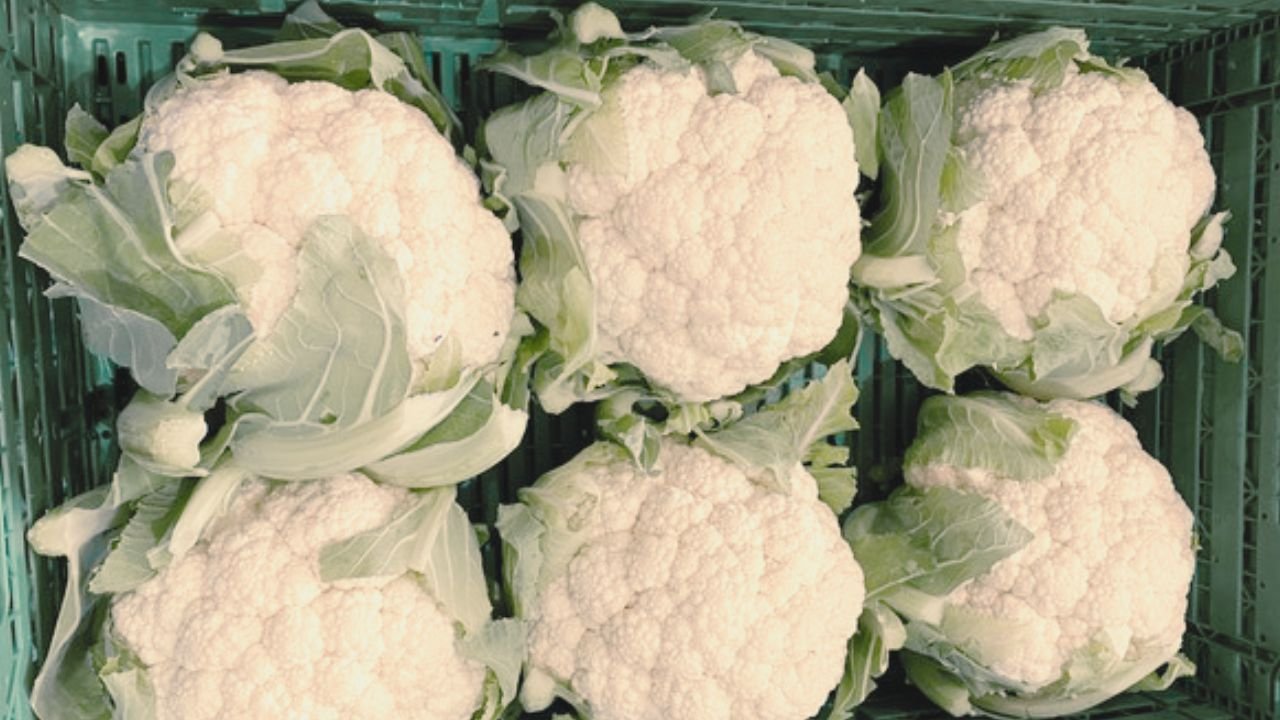
Cauliflower prices swung by roughly 230% in 2025. That kind of volatility doesn’t just frustrate shoppers — it squeezes restaurant margins, disrupts retailer shelf plans, and forces food manufacturers to reformulate products mid-cycle.
This isn’t a one-time problem. Cauliflower shortages have hit multiple countries across multiple years, and the conditions driving them are getting harder to predict. If your business touches cauliflower in any way — sourcing it, selling it, or using it as an ingredient — this article breaks down why shortages keep happening and what you can actually do about it.
Why Cauliflower Keeps Running Short
Cauliflower is a fragile crop. Hard frosts, heavy rain, and heatwaves can each destroy a crop at different stages of growth. It doesn’t take a catastrophic event — a few bad weeks of weather at the wrong time is enough to wipe out a significant portion of a region’s harvest.
The bigger structural problem is where cauliflower is grown. Production is heavily concentrated in a small number of regions: California, Arizona, Spain, and parts of the UK. When one of those regions has a bad season, the effects ripple across the entire supply chain.
Farmers also can’t quickly respond to sudden demand changes. Planting decisions are made months in advance, which locks in supply. If a weather event wipes out part of a crop, there’s no fast way to replace that volume.
Real examples show how quickly this plays out. During the 2015–2016 season, cold weather in California’s Imperial Valley and near Yuma, Arizona caused US wholesale prices to more than double. Retail prices in some markets reached around $7 per head. Trade reports at the time noted that demand was exceeding very light supply, with high prices expected to continue well into January.
In the UK in 2019, heavy June rainfall wiped out crops in Lincolnshire. A simultaneous July heatwave across Europe hit alternative suppliers. Some UK supermarkets were left stocking only organic cauliflower at £2 a head — double the usual price. Growers expected the shortage to ease by early September, but the gap still disrupted supply for weeks.
Industry forecasters also track predictable seasonal gaps. FreshPlaza reported a forecasted sharp supply drop in weeks 12 through 14 due to planting schedules — showing that even known seasonal gaps can cause real disruption when buyers aren’t prepared.
Climate Change Is Making the Timing Less Predictable
Seasonal patterns used to be reliable enough that supply chains could plan around them. That’s changing. Climate-driven shifts are making the timing of harvests harder to predict, which breaks the planning assumptions that retailers and distributors depend on.
Mild autumn and winter temperatures cause crops to mature earlier than expected. That shortens the harvest window and leaves fewer vegetables ready for spring. In the UK, this extends what’s known as the “hungry gap” — the April to early June period when domestic crops are sparse. Retailers then turn to imports from continental Europe, but that’s often the same moment European supply is also strained.
Floods in key European growing areas delay planting and slow import logistics. Freezing temperatures and heavy rain in California in early 2026 hit cruciferous vegetable crops hard, reducing fresh harvests and pushing prices higher. These aren’t isolated incidents — they point to a shift in the baseline conditions for open-field vegetable production.
For businesses, this means the seasonal supply windows they’ve relied on for years may no longer hold. A retailer who expects UK cauliflower to be available in May based on past patterns may find that supply peaked two weeks earlier, and imports are scarce at exactly the same time.
Demand Has Grown — and That Makes Every Shortage Worse
Ten years ago, cauliflower was mostly sold fresh and whole. That changed as low-carb and gluten-free eating became mainstream. Cauliflower rice, pizza crusts, snack foods, and frozen meals all created a much larger and more consistent demand than traditional fresh vegetable markets used to generate.
That’s a problem when supply drops. There are now more buyers competing for the same limited volume — fresh retailers, food service operators, and packaged food manufacturers all pulling from the same pool at the same time.
This is part of what drove the 230% price fluctuation in 2025. Bad weather reduced supply. But because demand was already elevated from years of product development around cauliflower, the price spike was sharper and faster than it would have been a decade ago.
The 2015–2016 US shortage showed an early version of this dynamic. Quartz’s coverage at the time noted that demand was already outpacing supply before the weather event, which amplified the price shock when cold temperatures hit California’s growing regions.
How Shortages Hit Grocers, Restaurants, and Food Manufacturers Differently
Retailers
Grocers face an immediate choice when supply drops: raise shelf prices, switch to organic or imported product at thinner margins, reduce the number of cauliflower SKUs on display, or some combination of all three. None of these options are clean.
Raising prices risks losing customers to competitors. Switching to organic or imported product protects availability but squeezes margin. Reducing display space signals scarcity, which can trigger panic buying or customer complaints. The 2019 UK shortage was a clear example — some supermarkets ended up stocking only organic heads at twice the normal price, which wasn’t a good outcome for anyone.
Restaurants
Restaurants feel shortages in the cost line first. When wholesale prices double in a few weeks, a dish priced at a fixed menu price suddenly loses margin fast. Operators have a few options: absorb the cost, raise menu prices mid-season, swap in a substitute vegetable like broccoli or cabbage, or reduce portion sizes.
None of these are ideal for customer experience. Menu price changes mid-season confuse regulars. Substituting broccoli for cauliflower works in some dishes but not others. The practical advice here is to build some price flexibility into menu pricing for seasonal vegetables, and maintain at least one or two tested substitute recipes for high-volume cauliflower dishes.
Food Manufacturers
For packaged food manufacturers, the stakes are higher because lead times are longer. A frozen cauliflower rice product or a cauliflower-based pizza crust requires sourcing agreements, production schedules, and packaging commitments made months in advance. A sudden price spike or supply drop mid-production cycle is expensive to absorb.
Manufacturers who depend heavily on cauliflower as a primary ingredient need to think about contract structure, not just spot pricing. Locking in supply through forward contracts or long-term grower agreements reduces exposure when spot markets spike.
What Businesses Can Do to Manage the Risk
Diversify Your Sourcing
If your cauliflower comes from one region, you’re fully exposed every time that region has a bad season. Mixing sourcing across California, Arizona, Mexico, and European suppliers when possible reduces the chance that a single weather event shuts down your supply completely.
This requires building supplier relationships in advance, not scrambling for alternatives when a shortage hits. Distributors and produce buyers who already have secondary supplier contacts in place recover faster when primary supply drops.
Use Forward Contracts Where You Can
Spot market prices are where shortages hurt most. If you’re buying fresh cauliflower at spot prices during a spike, you’re paying the full premium with no protection. Forward contracts or seasonal supply agreements with growers lock in price and volume ahead of time.
These aren’t always available to smaller buyers, but for mid-size and larger food businesses, they’re worth the contract negotiation effort. The premium you pay for price certainty is usually much smaller than the cost of a spot market spike.
Track Seasonal Forecasts
Industry outlets like FreshPlaza publish regular forecasts on planting schedules and anticipated supply gaps. The week 12–14 drop mentioned in their reporting isn’t a surprise to buyers who follow trade publications — it’s a known seasonal risk that can be planned around.
Building this tracking into your procurement process, even informally, gives you earlier warning than waiting until prices move in the spot market.
Develop Tested Substitutes in Advance
For restaurants and manufacturers, having a tested alternative ready before a shortage hits is far better than improvising under pressure. Broccoli, cabbage, and Brussels sprouts can replace cauliflower in many applications, but the swap needs to be tested for taste, texture, and cost impact before you’re forced to make it.
A restaurant that has already tested a broccoli-based version of a popular cauliflower dish can make the switch cleanly. One that hasn’t tested it scrambles — and customers notice.
Consider Frozen or Processed Cauliflower as a Buffer
Fresh cauliflower has no buffer — when it’s short, it’s short. Frozen cauliflower florets and processed cauliflower products have longer shelf lives and are often sourced under longer-term contracts. For food service operations that use cauliflower as a component rather than a centerpiece, switching some usage to frozen product during shortage periods can stabilize costs.
Is This Going to Get Worse?
The honest answer is: probably more frequent. The core drivers — concentrated production regions, weather sensitivity, climate-driven timing shifts, and growing demand — are all structural. They don’t resolve between bad seasons.
Tasting Table and other outlets flagged cauliflower as one of several grocery items likely to see tighter supply or quality issues in 2026. Growers have noted that cold weather impacts from prior seasons may continue to affect yields. That doesn’t mean cauliflower disappears from shelves — shortages typically last weeks to a few months before supply recovers. But the gaps are becoming more frequent and harder to predict.
Also Read: