

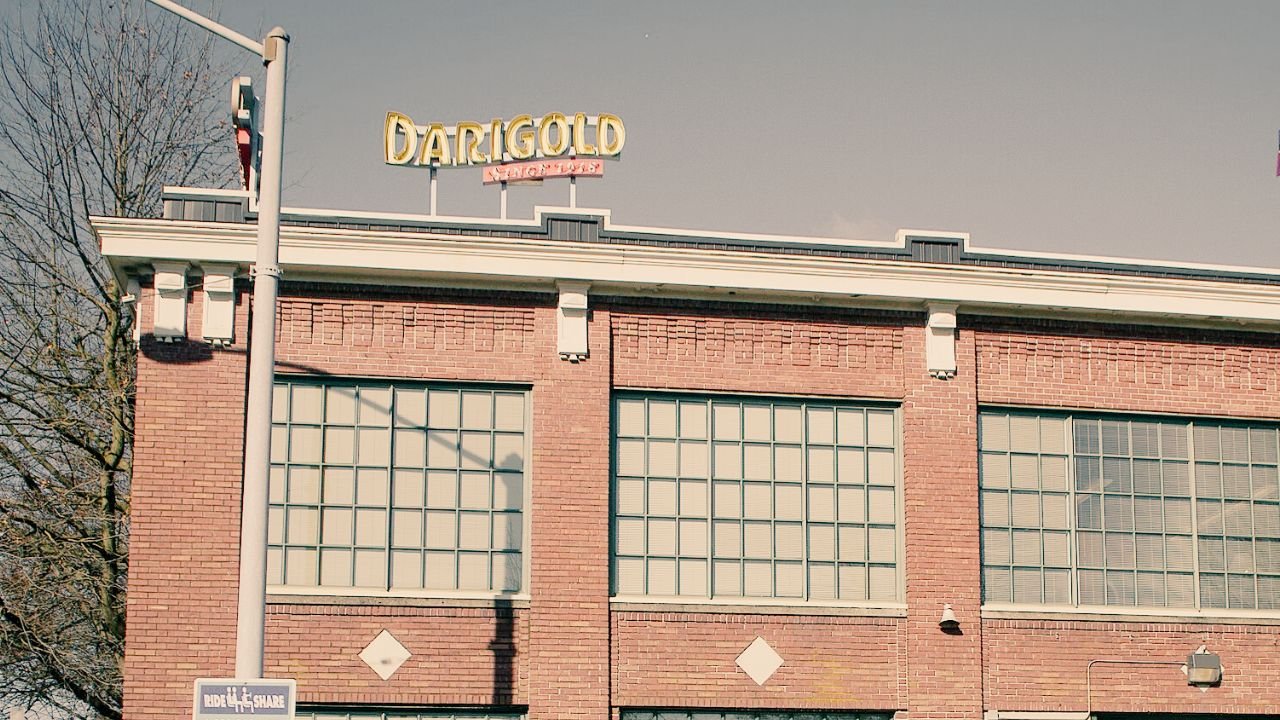
If you’ve seen headlines about plant closures in Chehalis, Medford, or Salt Lake City, it’s natural to wonder whether Darigold is shutting down. The short answer is no. But the fuller picture is worth understanding, especially if you’re a farmer, employee, or just someone who follows the dairy industry.
This article breaks down what Darigold actually is, why certain plants are closing, where the company is investing, and what the financial pressures mean for the people involved.
What Darigold Is and How It Operates
Darigold is the trade name of the Northwest Dairy Association, a farmer-owned dairy marketing cooperative. It’s not a publicly traded corporation with shareholders — it’s owned by roughly 250 member farms across Washington, Oregon, Idaho, and Montana.
The cooperative sells a full range of dairy products: milk, butter, cheese, yogurt, and dairy ingredients. These go through wholesale, retail, and foodservice channels. Darigold is one of the largest dairy producers in the country.
The cooperative structure matters here. Member farmers share both the financial risks and the rewards. When the co-op makes capital investments or absorbs losses, the farmers feel it directly. This is different from how a typical corporation works, and it shapes how you should interpret news about closures or deductions.
Darigold Is Not Going Out of Business
There are no credible reports of bankruptcy, dissolution, or company-wide shutdown. Business commentary on Darigold’s current status describes it as stable and actively expanding — not retreating.
The confusion comes from a common misread: plant-level closures get reported locally, people search the company name, and the results look alarming if you don’t have context. But closing one facility is not the same as a company collapsing.
Think of it like a national retail chain closing one underperforming store while opening a larger location elsewhere. Nobody calls that “going out of business.” The same logic applies here. Darigold is consolidating older facilities and building new ones — that’s a capital strategy, not a shutdown.
Why Specific Plants Are Closing
The closures are real and they do affect real people. Here’s what’s actually happened:
- Chehalis, WA: Darigold confirmed it would close its production facility there, with operations ending by early December 2025.
- Medford, OR: The plant closed at the end of February, eliminating 29 jobs. Medford no longer has a local milk processing facility.
- Salt Lake City, UT: Darigold previously closed the Cream O’Weber plant on July 31, cutting 96 positions.
These are not random decisions. Large food producers regularly consolidate older, less efficient facilities rather than maintain them indefinitely. Running too many plants at partial capacity is expensive. Closing several smaller ones and replacing them with a modern, high-output facility often makes more financial sense over the long run.
That said, the local impact is real. Communities lose jobs, tax revenue, and in Medford’s case, the entire local milk processing infrastructure. Workers face displacement. These are genuine costs that shouldn’t be brushed aside just because the strategy makes sense on paper.
Where Darigold Is Actually Putting Its Money
While plants are closing in some areas, Darigold is building a major new production facility in Pasco, Washington. This is the investment side of the story that often gets missed when people focus only on closures.
To fund the Pasco plant, the cooperative is deducting $4 per hundredweight from member farmers’ milk checks. Of that $4, $2.50 goes directly toward construction of the new facility, and $1.50 offsets current operating losses.
To put that in concrete terms: a farmer shipping 1,000 hundredweight of milk sees a $4,000 deduction per period. That’s $2,500 going into building the new plant and $1,500 covering losses the co-op is currently running. It’s not a small ask.
Darigold has also brought its delivery fleet in-house, rather than relying on outside carriers. That kind of operational move takes planning and capital. Companies that are about to fold don’t invest in logistics infrastructure. It signals continued commitment to serving customers, not preparation for exit.
The Pasco plant is essentially replacing facilities like Chehalis — it’s a newer, more efficient operation meant to handle higher volume with lower per-unit costs. The closures and the new build are two sides of the same strategy.
What the Farmer Deductions Actually Signal
The $4 per hundredweight deduction reflects real financial strain. Darigold is running operating losses, and member farmers are being asked to help fund both current operations and future infrastructure. That’s not a trivial burden.
But it’s also not unusual for agricultural cooperatives. Co-ops often require member contributions for capital projects, especially when building or modernizing facilities. Farmers share in future gains as well — once the Pasco plant is operational and running efficiently, the expectation is that costs come down and returns improve.
The key distinction is between short-term margin pressure and existential risk. Darigold is under financial pressure right now. That’s legitimate news. But financial pressure is not the same as insolvency, and a co-op asking members to fund a new plant is not the same as a company preparing to close.
Farmers who are unhappy about the deductions have valid concerns. A $4,000 hit per 1,000 hundredweight adds up quickly, especially if margins are already tight. Cooperative governance means these decisions go through a board of farmer-members, but individual farmers don’t always agree with board strategy. That tension is normal in co-op structures.
What About the Darigold Brand in the Philippines?
Some older readers — particularly those from the Philippines — may remember the Darigold brand disappearing from shelves there in the mid-1970s. That’s a separate story entirely.
Darigold operated in the Philippines for roughly 20 years, dominating the evaporated milk market. The brand eventually exited after legal disputes between local business partners and the parent company. Courts got involved, and the brand withdrew from that market.
This has nothing to do with the current U.S. cooperative. It’s a historical, geographically isolated case. Mentioning it here only because it occasionally surfaces in searches and causes confusion — someone who grew up watching Darigold disappear from Philippine grocery stores might reasonably wonder if history is repeating itself. It isn’t, at least not in that sense.
Will Darigold Products Disappear from Store Shelves?
For most consumers in the Northwest, the answer is no. Production volume shifts from closed plants to other active facilities and eventually to the new Pasco plant once it’s running.
A shopper in Seattle won’t notice the Chehalis plant closure in any direct way. The supply chain adjusts internally. Distribution changes are largely invisible to retail customers, though consolidation can sometimes affect pricing or regional product availability over time.
For communities near closed plants, the change is more visible — longer haul distances for raw milk, fewer local processing jobs. But the brand itself isn’t going away from retail.
For more context on how businesses navigate restructuring and what these signals mean for different stakeholders, Step Business Journal covers these kinds of operational business stories in plain language.
The Bigger Picture: Industry-Wide Consolidation
Darigold’s situation isn’t unique. The broader dairy industry has been consolidating for years. Rising production costs, tighter margins, and shifting consumer demand have pushed many processors to close older facilities and invest in fewer, larger, more automated plants.
This trend affects cooperatives and investor-owned companies alike. The economics of running a small, aging plant are increasingly difficult. Modern facilities can process more milk at a lower cost per unit, which matters a lot when commodity prices fluctuate and competition is intense.
Darigold is following the same playbook that most large food producers have been running for the past decade. The Pasco investment fits that pattern — it’s a bet on efficiency and scale rather than geographic spread.
The Bottom Line
Darigold is not going out of business. The company is restructuring — closing older, less efficient plants and building a major new facility in Pasco, Washington. That process creates real disruption for affected workers and communities, and it creates short-term financial pressure for member farmers through milk check deductions.
But these are signs of a cooperative making hard operational decisions, not a company in collapse. If you’re a farmer, employee, or community member directly affected, the impact is real and worth taking seriously. If you’re a consumer wondering whether Darigold products will vanish from shelves, they won’t.
The distinction between a plant closure and a company shutdown matters. In Darigold’s case, they are not the same thing.