

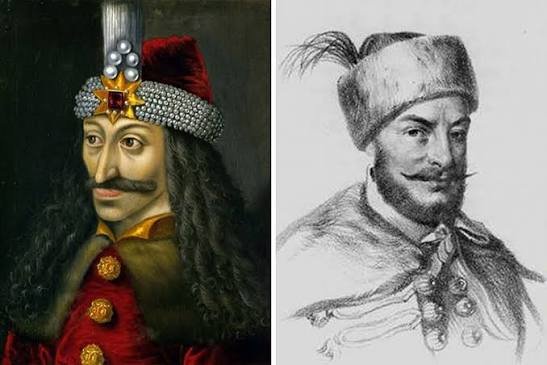
Understanding the complex historical context of Wallachia requires a look at its leaders, one of whom was Mihnea cel Rău. Known for his brief but turbulent rule, Mihnea was a Voivode, or prince, deeply connected to the infamous Vlad III Dracula, also known as Vlad Țepeș. Both became pivotal figures in Wallachia’s history during the late medieval period. Mihnea’s leadership from 1508 to 1509, although short-lived, provides insight into the political and dynastic struggles of the time. While his rule may not be as widely known as that of his father, it mattered significantly in shaping both the politics and historical narratives of Wallachia.
Explaining the Nickname “cel Rău”
The nickname “cel Rău” translates to “the Evil,” “the Bad,” or “the Wrongdoer.” This epithet tells you much about the volatile political environment Mihnea navigated. Much of the name’s adoption came at the hands of his political adversaries, particularly the Craiovești boyar faction. They used the nickname to mar his reputation, an approach not uncommon in power struggles where controlling narratives could bolster or diminish a leader’s standing. Often, you find that such labels stick due to repeated use rather than truth. This concept forces us to question just how valid a posthumous reputation can be when largely shaped by enemies.
Early Life and Background
Born around 1460–1462 in Wallachia, Mihnea cel Rău’s early years were rooted deeply in the complex political dynamics of his time. Although some sources point to 1460 as his birth year, others suggest 1462 or “about 1462.” Regardless of the exact date, this places his formative years during a period of significant conflict and change in his homeland. He is recognized as the son of Vlad III Dracula, but the specifics concerning whether he was the son of Vlad’s first wife or an illegitimate child remain contentious, reflecting the often-fragmented historical records of the era. Either way, his lineage connected him to Vlad, which carried its weight both politically and in popular perception.
Path to Power
Mihnea’s ascent to power in 1508 laid bare the shifting alliances and fragile power structures that defined Wallachia’s leadership transitions. His rise followed the rule of Radu cel Mare, under circumstances steeped in political maneuvering. During this turbulent time, Mihnea had to navigate rival factions and external influences vying for control of Wallachia. The geopolitical landscape was tense, with competing factions like the Craiovești seeking to strengthen their grip on governance. Mihnea’s path was fraught with challenges, requiring strategic navigation of allegiances and enemies alike as he sought to secure his rule.
Brief Tenure as Voivode
Mihnea’s short reign as Voivode from 1508 to 1509 was marked by significant challenges and crucial decisions. Taking the helm from Radu cel Mare, Mihnea had to quickly assert his authority. His rule was characterized by internal power struggles, policy decisions that sought to solidify his hold on Wallachia, and dealing with his powerful adversaries. While his leadership lasted only a year, the impact of his decisions set the stage for the historical narratives that followed. The brief tenure was unfortunately more of a survival game against powerful boyar factions rather than realizing any long-term governing agenda.
Death and its Circumstances
Mihnea’s life ended abruptly and violently in Sibiu on 12 March 1510. Various reports suggest assassination, a stark indication of the dangerous and volatile political climate of the time. His death underscores the perilous nature of leadership in Wallachia. Political assassination was not uncommon and illustrates how power dynamics often culminated in death rather than peaceful transfer or retirement. The assassination theory aligns with the broader historical context, wherein rivals often found violent means to resolve disputes over power and influence, further complicating our understanding of Mihnea’s overall impact and legacy.
Historical Reputation
Mihnea cel Rău’s reputation as a leader has largely been negative, molded by the narratives of those who opposed him. This perception may not fully represent the realities of his leadership and policies. The label of “cel Rău,” attached by his enemies, casts a long shadow on his legacy, raising issues about historical bias in the telling of his tale. When adversaries control the narrative, the resulting image often lacks nuance, leaving us to question how accurately history has documented his rule. This highlights the power of narrative control as a political tool, skewing public perceptions well beyond the individual’s life.
Conclusion
Mihnea cel Rău’s brief rule and challenging passage through Wallachia’s political landscape make him a fascinating study in historical legacy. His story embodies the intricacies and risks faced by leaders in an era dominated by political strife. While his legacy is darkened by adversaries’ accounts, the importance of examining these narratives provides a window into history’s often skewed portrayals. As you explore historical figures like Mihnea, it’s crucial to question and consider the influences shaping their portrayals. In doing so, you develop a more rounded comprehension of the past and its figures.
Our goal is always to bring you transparent, well-rounded analyses that acknowledge historical biases and limitations. To explore more such insights, visit Step Business Journal for a wealth of information.
Also Read: